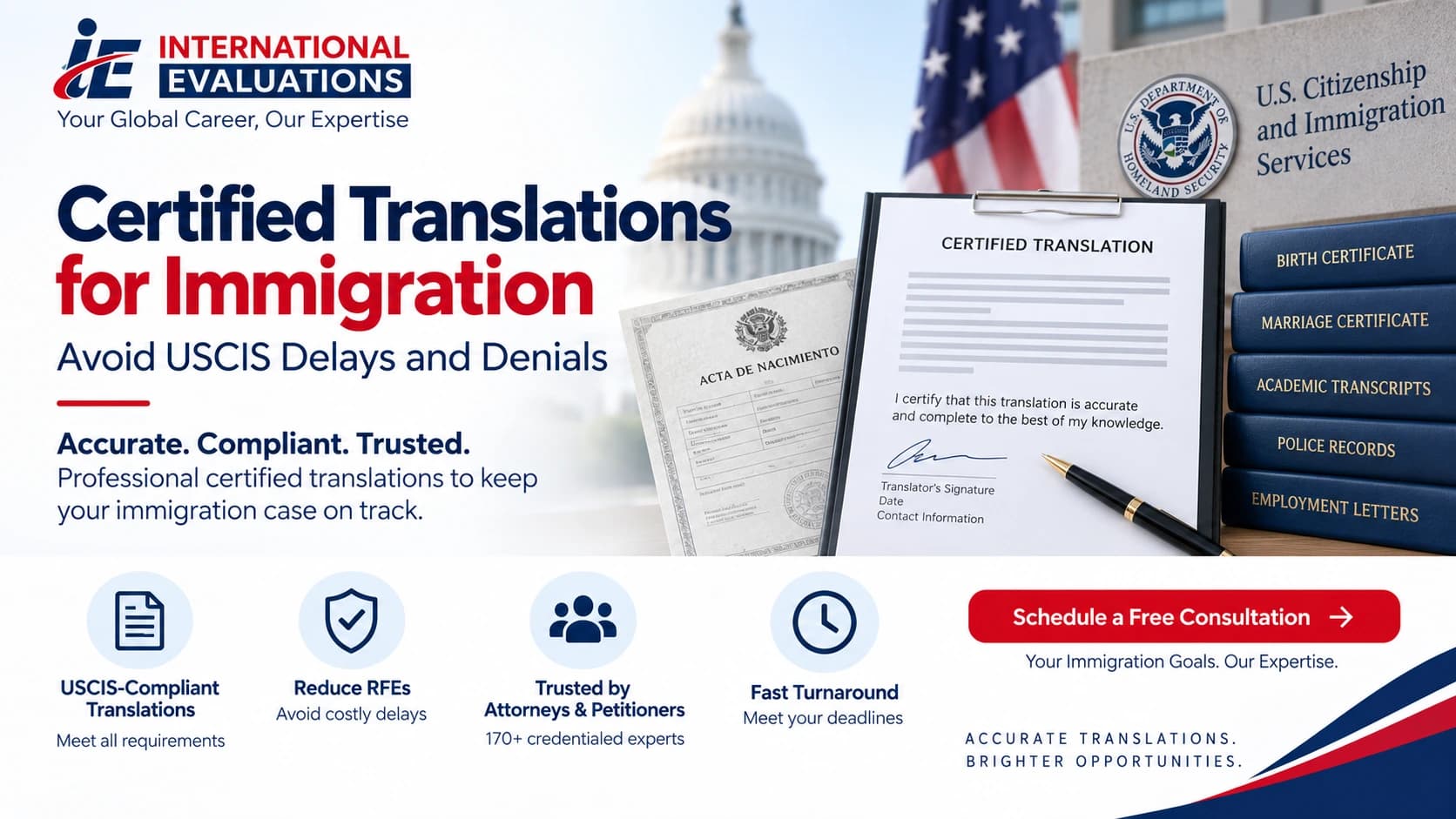
Submitting documents in a foreign language without a proper certified translation is one of the fastest ways to trigger a Request for Evidence (RFE), slow your case, or even face a denial. USCIS has strict guidelines, and failing to meet them can put your entire immigration process at risk.
In this guide, you’ll learn what USCIS requires, how certified translations should be formatted, and how to avoid costly mistakes that could delay your approval.
Why Certified Translations Matter for USCIS
Every USCIS officer must be able to review your documents in English. If your evidence is in another language, you must provide:
A complete, word-for-word translation — no summaries or partial translations.
A signed certification statement from the translator affirming accuracy.
Contact information for the translator or translation agency.
Failure to meet these requirements can result in:
RFEs requesting compliant translations
Months of processing delays
Denials if deadlines aren’t met
Step-by-Step: How to Prepare a USCIS-Compliant Certified Translation
1. Gather Your Source Documents
Identify all non-English documents in your immigration package, such as:
Birth certificates
Marriage or divorce certificates
Academic transcripts and diplomas
Police clearance records
Employment verification letters
2. Use a Qualified Translator
While USCIS doesn’t require “sworn” translators, they must be:
Fluent in both the source language and English
Experienced in translating official and legal documents
Independent from the applicant or petitioner (avoid self-translation)
3. Include a Certification Statement
Your translation must include a signed statement, for example:
“I, [Name], certify that I am fluent in English and [Source Language], and that the translation of the attached document is accurate and complete to the best of my knowledge.”
This statement must have:
Translator’s printed name and signature
Date of certification
Contact details
4. Maintain the Original Format
Translations should mirror the original document as closely as possible:
Keep headings, seals, and stamps noted in brackets (e.g., [Seal: Ministry of Education]).
Translate all text, including handwritten sections.
Clearly note if any part of the original is illegible.
5. Present Originals and Translations Together
In your USCIS submission:
Place the original-language document first
Follow with the certified translation
Keep both together in the same section or exhibit
Formatting Tips for Clear, Professional Submissions
Use bold headers for document titles
Clearly label each translation as “Certified Translation of [Document Name]”
Add page numbers to both originals and translations
Keep the layout clean and easy to read
Advanced Tactics to Prevent Translation-Related RFEs
Review all translations for spelling, date, and name consistency
Use translators familiar with immigration-specific terminology
Ensure formatting and language match the style USCIS expects
For multi-page translations, have each page initialed by the translator
How We Help Attorneys & Petitioners Win RFEs
Whether you’re an immigration lawyer preparing a client’s package or a self-petitioner managing the process alone, we create expert opinion letters and organize response materials so they fully satisfy USCIS scrutiny.
Why legal teams trust our services:
Access to 170+ credentialed experts in STEM, business, healthcare, and more
Fast turnaround to meet urgent RFE deadlines
USCIS-compliant formats and language
Strong track record in converting RFEs into approvals
Final Word
A single translation error can delay or derail your immigration case. By working with professional translators who understand USCIS requirements, you can avoid unnecessary RFEs and keep your application moving forward.
We provide accurate, certified translations so you can submit with confidence and stay on track toward your immigration goals.
Schedule a Free Consultation
Order a Work Experience Evaluation